








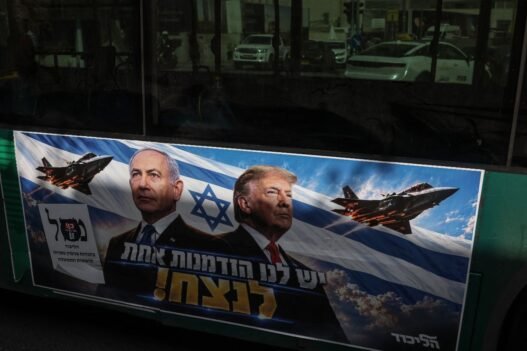

As Israel’s general elections and the US midterm elections approached, American military aid to Israel emerged as a contentious issue under different circumstances in the two countries. In the United States, it became a divisive question among Israel’s supporters and advocates. Some argued that the aid came at the expense of the poorest segments of American society, while others considered it a valuable contribution to US interests. The debate took a decisive turn, however, after President Donald Trump announced that he had agreed with Israeli Prime Minister Benjamin Netanyahu to end military aid in 2027, a year earlier than originally scheduled.
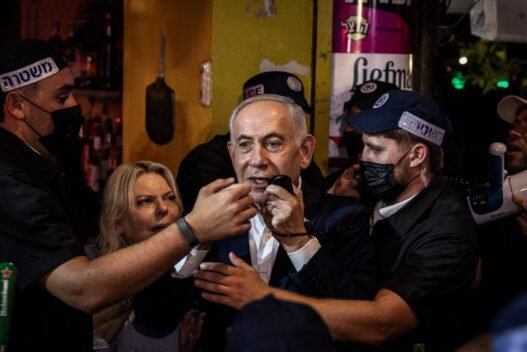
Officials at Israel’s Finance and Defense Ministries said they had been blindsided by the decision and were unprepared for its announcement, particularly as they had expected negotiations over the future of the aid. Netanyahu had initially spoken of a gradual reduction leading to its complete termination over a decade. But four days before the Knesset elections, he abruptly changed his tone, declaring that anyone expecting Israel to continue receiving tens of billions of dollars for its defense budget should “stop doing so,” because America had changed. Criticism quickly spread across Israel’s political establishment, with politicians and commentators describing the move as an “electoral bribe,” a “disaster,” or a “slap in the face,” while others considered it a natural adjustment to changing realities.
Netanyahu had raised the issue several times in the past, presenting the proposed termination as an attempt to remove Israel from the American domestic political debate and rebuild its security partnership with the US military and Defense Department. He justified accepting the end of aid by arguing that it would grant Israel greater political and military autonomy, that the Israeli economy could absorb the consequences, and that the country would benefit from redirecting a substantial share of military procurement to domestic manufacturers.
The timing was no coincidence. The announcement came on the morning of the US midterm elections, against the backdrop of a sharp decline in support for aid to Israel across both parties. Last July, 104 members of the House of Representatives voted in favor of immediately terminating military aid, compared with 37 Democratic representatives who had supported a similar resolution two years earlier, which was defeated by a Republican majority. Israel has grown increasingly concerned that a Democratic victory, including that of anti-Israel factions, in both the House and Senate could lead to the termination of aid. It therefore prefers to pursue the move through an agreement.
For the Israeli military, however, ending military aid at this particular moment is nothing short of disastrous. The demands of “permanent war” require, according to a government decision, allocating at least 400 billion shekels (approximately $130 billion) over the next decade to strengthen military capabilities. Israel’s defense budget has risen sharply during the war, from 60 billion shekels in 2023 to 185 billion in 2026, making this hardly an ideal time to cut aid. The military also engages in an annual, bitter struggle with the Finance Ministry over every billion shekels it receives, whether to cover operating expenses or develop military capabilities.
The Nature and Scale of US Aid
Military aid to Israel began on a large scale during the October 1973 war and expanded and became institutionalized in its aftermath. The Clinton administration pledged $26.7 billion in assistance for the 1999–2008 period, after which the George W. Bush administration increased the amount to $30 billion for 2009–2018. In September 2016, the Obama administration and the Israeli government signed a security assistance agreement covering 2019–2028, worth a total of $38 billion. The annual allocation was divided into $3.3 billion for weapons and equipment purchases and $500 million for missile defense systems, including Iron Dome, David’s Sling, and Arrow. The Biden administration subsequently provided an additional $8.7 billion in special assistance following October 7, 2023.
According to the Congressional Research Service, Israel received approximately $300 billion in cumulative US assistance between its establishment and 2025, adjusted for inflation and expressed in current dollars. Some 90% of this amount was provided after 1973. Meanwhile, the Costs of War Project at Brown University’s Watson Institute estimates that the United States provided Israel with at least $21.7 billion in military assistance between October 2023 and September 2025, including regular aid and special packages approved by the Biden and Trump administrations during the war.
Israeli media have reported that American aid has accounted for an average of between 25% and 35% of Israel’s defense spending over multiple years. In the decade preceding October 7, 2023, regular US assistance financed between 15% and 20% of defense expenditure. In 2024–2025, that share averaged between 23% and 24%.
From Israel’s perspective, however, American assistance was never a free gift. The memorandum of understanding requires most of the aid to be spent on US-made weapons, while gradually phasing out the option of converting part of it into shekels for procurement from Israeli defense industries. Israel also believes it would not be the only party to suffer from a reduction in aid. American arms manufacturers such as Boeing, Raytheon, and Lockheed Martin could also be affected, as the overwhelming majority of assistance funds return to them through procurement contracts. These companies, together with their labor organizations, wield considerable influence in Washington in defense of their interests.
Israeli specialists believe that ending aid could encourage Israel to expand the Abraham Accords, strengthening the economic incentive to increase exports of defensive and offensive weapons systems to new markets, including Saudi Arabia, Bahrain, and other Arab countries. Despite the announcement of the aid’s termination, negotiations are reportedly underway to spread US commitments to Israel over 13 years rather than ten, thereby mitigating the impact on the pace of military procurement.
Electoral Calculations
Some observers argue that Trump’s announcement is largely symbolic, since terminating military aid falls within Congress’s authority rather than his own. They believe the announcement, coordinated with and approved by Israel, was intended to forestall any renewed congressional effort to cut aid during the budget approval process. Its timing, on the morning of the midterm elections, may also have served Republican interests at the last minute, as the party confronted what it viewed as a Democratic “tsunami.”
Sefer Plotsker, an economic commentator for Yedioth Ahronoth, wrote:
“If Trump saw a need to terminate the aid agreement two years before its expiration and do so publicly, all at once, money was not the motive. Rather, his motivation was the growing hostility toward the current Israeli government in general, and Benjamin Netanyahu in particular, among American public opinion across the political spectrum. Trump’s advisers urged him to take a concrete, public step to sever ties, or at least publicly distance himself, from Netanyahu’s Israel. After delays and hesitation, the president did so today.”
In an editorial for Walla, Nir Kipnis wrote that ending American aid represented a major blow to the security establishment, while suspicions were growing that a political deal had been struck between two men who had lost their respective electoral campaigns. He added that the agreement was hardly between equals, describing it as “apparently between a wealthy uncle and his poor relative.” The arrangement was particularly perplexing given that Israel had been waging a war on “seven fronts” for more than three years. The timing alone, he argued, should alarm every Israeli. Kipnis questioned whether Netanyahu’s willingness to relinquish vital security assistance amounted to a “payment to President Trump” or a form of reciprocation for Trump’s public support on the eve of the Israeli elections.
Israeli opposition leaders also attacked Netanyahu over Trump’s announcement. Gadi Eisenkot, leader of Yashar, said:
“The special relationship with the United States is a fundamental component of Israeli national security. The fact that Israelis and the military discovered the changing nature of strategic relations through the media speaks volumes about the gravity of Benjamin Netanyahu’s conduct. He can no longer be trusted and must be replaced.”
Avigdor Lieberman, leader of Yisrael Beiteinu, suggested that the announcement reflected the price of Trump’s support for Netanyahu ahead of the elections: “The price of Trump’s support for Netanyahu is $3.8 billion a year.”
Yair Golan, leader of the Democratic Party, likewise warned of the security and economic consequences of cutting aid, particularly after a prolonged war. He said:
“At a time when Israeli defense spending has reached enormous levels, and Israel urgently needs to replenish its offensive weapons stockpiles while its air defense capabilities have deteriorated following this prolonged war, Netanyahu has recorded yet another colossal failure.”
According to Golan, cutting aid would force the Israeli public to shoulder the cost of financing the country’s security needs, while negatively affecting living standards. He attacked Netanyahu, saying: “A responsible prime minister would seek to increase American aid, not eliminate it. Netanyahu is deepening the security and economic crisis and jeopardizing Israel’s future.”
Former Prime Minister Ehud Barak described the Trump-Netanyahu agreement to end aid as “Netanyahu’s stinking deal.” He argued that Netanyahu was relinquishing aid without consultation in exchange for a statement of support from Trump ahead of the elections. Barak wrote:
“What more needs to happen for all of us to understand that this man has lost his way, exceeded his authority, and is clearly unfit to lead the country? Netanyahu should go home.”
Trump’s announcement offers a glimpse into the direction of US-Israeli relations, particularly as perceived across the region. It certainly does not amount to a complete or unequivocal abandonment of Israel. Rather, it signals the beginning of a “genuine reassessment” of the relationship. Nor can the announcement be separated from the defeat of Israel’s supporters in Congress and AIPAC’s transformation from one of Washington’s most powerful lobbying organizations into an electoral liability.
Perhaps Israel’s standing in the United States itself is beginning to shift from a “strategic asset” to a “bad investment.” Trump’s assertion that he would be the last president to support Israel, alongside Vice President JD Vance’s remarks that the war on Iran and support for Israel contributed to Republican electoral losses, point to the changes that may lie ahead in the coming period.