





Paris | A UN report accusing Israel of ethnic cleansing in South Lebanon has been sitting in New York for months, awaiting a decision on its fate. More than a hundred pages long, the unprecedented document characterizes Israel’s actions as a “crime of ethnic cleansing.” It was prepared by Ban Chaluoka, the UN Secretary-General’s Special Adviser on the Prevention of Genocide, a position charged with an almost impossible task and burdened with an ominous title.
Neither the gravity of that mandate nor the good intentions behind it have prevented Israel from committing genocide in Palestine, with the United States standing firmly behind it. Israel has now extended its campaign to Lebanon, where it has committed what Chaluoka describes as “ethnic cleansing against Shia Muslims.”
Chaluoka painstakingly builds his case across more than a hundred pages, documenting Israeli military operations in South Lebanon, Beirut, and its southern suburbs between March 2 and May 15, 2026. The report traces the emergence of intent, advance preparations for ethnic cleansing, and its systematic execution, a process that remains ongoing.
Yet the report itself raises questions. Its months-long confinement to the drawers of the UN, since June, points to a conspicuous reluctance to advance the indictment and make it public. Publication would be the first step toward turning the document from an internal report into a formal international legal case.
The decision ultimately rests with outgoing Secretary-General António Guterres. It remains unclear whether he will invoke Article 99 of the UN Charter to bring the matter before the Security Council, potentially paving the way for referral to the International Criminal Court, or whether the obstacles awaiting the report at the Council, coupled with the imminent end of his mandate, will lead him to pass this burning file to his successor. Its fate would then be left to the next Secretary-General, who could either pursue it or consign it indefinitely to the drawers.
A Detailed Record of the Crime
Chaluoka, a Zambian national, draws extensively on the findings of fact-finding missions whose investigators, many of them based in Geneva, included military experts and forensic specialists. He also relies on reports by UN human rights investigators, who spent months collecting evidence, documents, and testimonies, then assessing them against the relevant legal standards to determine how the acts committed in South Lebanon should be classified.
Together, these findings establish the nature of the crimes committed against the region and its inhabitants, as well as the continuation of the process to this day.
The report, however, stops short of covering the period that followed May 15. Since then, Israel has continued to complete the conditions for ethnic cleansing, dismantling virtually every foundation of civilian life. Alongside displacement, the destruction has extended to infrastructure and civilian property essential to sustaining life: farmland, agricultural production, industry, schools, hospitals, water and electricity networks, roads, places of worship, and cultural landmarks that preserve the memory of the land.
The investigation also documents the scale and frequency of forced evacuation orders targeting Shia villages, including a single day on which residents of 39 villages were ordered to leave. It records the number of people displaced by these orders and argues that, while international law permits the evacuation of civilians during military operations when necessary to protect their lives, the failure of displaced residents to return to their villages points to ethnic cleansing.
The report further bolsters its accusation of “ethnic cleansing against Shia Muslims” by noting that three Christian villages, alongside several Sunni and Druze villages, were spared systematic destruction and evacuation orders.
Four Indicators of an Ongoing Crime
Titled The Risk of Ethnic Cleansing of Shia Muslims in South Lebanon: An Early Preliminary Warning, the report identifies what it calls a “pattern of conduct”: a recurring, empirically documented set of actions by Israeli forces that points to an intent to ethnically cleanse South Lebanon of its Shia population.
According to the report, this pattern emerged on March 2, following Hezbollah’s launch of drones and rockets. Hezbollah said the attacks were retaliation for repeated Israeli and US strikes on Iran and Israel’s continued violations of the November 27, 2024 ceasefire agreement.
First: Mass displacement and the prevention of return. Between March 2 and May 15, the period covered by the report, Israeli operations led to the evacuation of 14 percent of Lebanese territory and displaced 1.2 million people, most of them Shia Muslims, from South Lebanon. Israel also unilaterally established a “yellow zone” extending five to ten kilometers into Lebanese territory, while excluding three Christian villages and several Sunni and Druze villages.
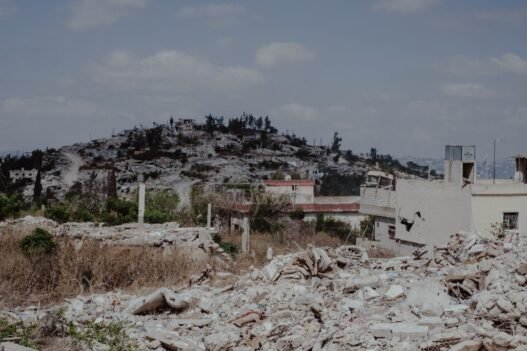
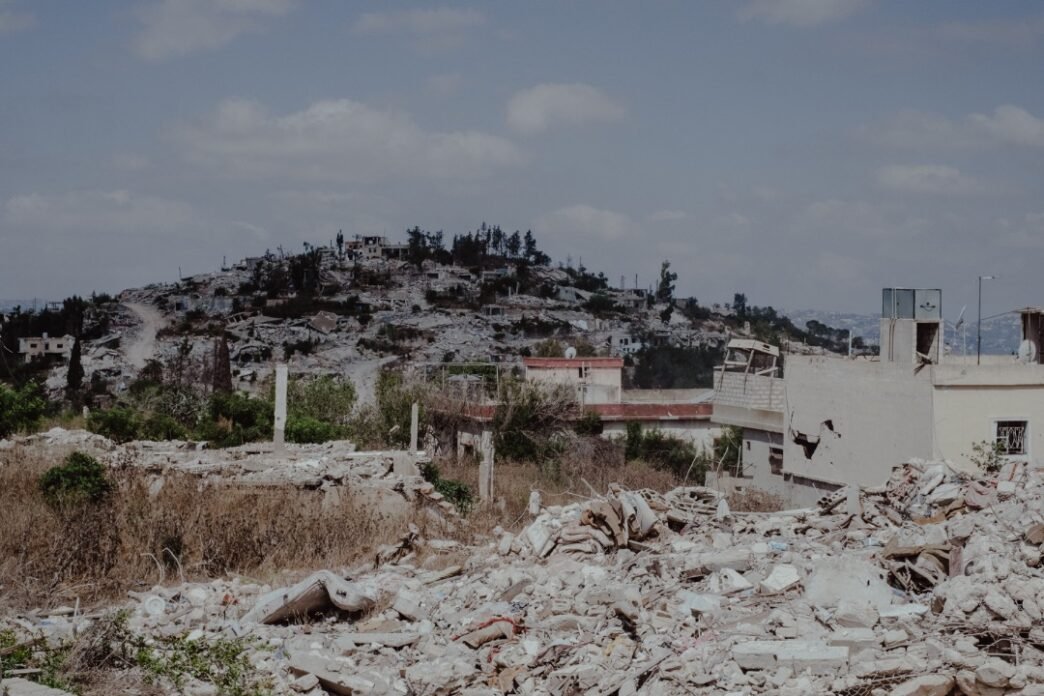
Second: The systematic destruction of civilian infrastructure. The report argues that the destruction is neither arbitrary nor incidental, but reflects a deliberate effort to make return impossible by razing residential areas, schools, water and electricity networks, agricultural land, and places of worship. Villages targeted include Naqoura, Bint Jbeil, Kfar Kila, Aita al-Shaab, Qawzah, Deir Siryan, Rab Thalathin, and Qantara.
Israel dropped 450 tonnes of explosives on these areas, destroying 27,000 homes, 182 public buildings, and 35 schools by June 15. Israeli Security Minister Israel Katz made the intent explicit when he declared that all homes and schools along the border would be destroyed, following the “Rafah and Beit Hanoun model.” For the report, this statement establishes a clear convergence between declared intent and destructive action.
Third: A prolonged occupation designed to empty South Lebanon of its Shia population. The occupied area represents 6 percent of Lebanon’s territory. The report argues that Israeli military operations violate the Hague Regulations governing land warfare, particularly the principles of necessity and proportionality. They also constitute grave breaches of the four Geneva Conventions and amount to collective punishment of Shia Muslims.
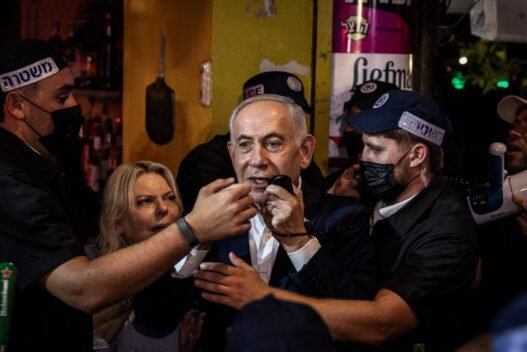
Fourth: The statements of Israel Katz and Benjamin Netanyahu. Katz has explicitly invoked the Rafah and Beit Hanoun model in Gaza, where mass displacement and the destruction of civilian infrastructure have been extensively documented. Netanyahu, meanwhile, has declared that Israel will not allow Hezbollah to grow stronger or pose a threat anywhere in Lebanon. The report interprets these statements as evidence of a sustained intention to inflict physical and demographic harm on the Shia population, while preserving occupied Christian villages within Lebanese territory. This, it argues, further underscores the discriminatory nature of the campaign.
How Does Chaluoka Propose Pursuing the Crime?
The report recommends that the UN Office on the Prevention of Genocide formally activate its atrocity-screening mechanism, paving the way for South Lebanon to be recognized as an area devastated by ethnic cleansing.
The Special Adviser would then request an urgent assessment of the situation based on the UN Framework of Analysis for Atrocity Crimes. The assessment would examine risk factors, discriminatory targeting of the Shia community, the systematic destruction of conditions necessary for residents to return, and the demographic consequences of Israel’s occupation of Lebanese territory. It would be submitted to the Secretary-General within a specified timeframe.
The Office would also establish direct contact with the Secretary-General and recommend that he invoke Article 99 of the UN Charter.
Article 99 empowers the Secretary-General to bring before the Security Council any matter he considers a threat to international peace and security. Invoking it would allow Guterres to formally alert the Council to the documented threat, seek recognition of Israel’s actions as a threat to international peace and security, and request an emergency session on the protection of civilians in South Lebanon. It could also open the way for referral to the International Criminal Court in The Hague.