






The departure of US forces has reshaped Iraq’s military landscape without resolving the question underlying the continued possession of weapons by armed factions: who holds sovereign decision-making power in Iraq?
The coalition’s withdrawal at the end of September removed one of the principal justifications for keeping weapons outside state control: resistance to occupation. Yet the departure of a foreign army does not automatically produce an independent state capable of defending its borders, securing its airspace, or shielding its economy from external pressure. Prime Minister Ali al-Zaidi thus faces a challenge that goes beyond disarmament. He must convince armed factions that the state can provide the protection they claim to offer through their own arsenals.
1. Economic Sovereignty
The shock to the dinar has sharpened this debate. On October 7, one week after the withdrawal, Iraq announced a currency devaluation, raising the dollar exchange rate from around 1,320 to 1,520 dinars. The adjustment meant that acquiring dollars required approximately 15% more dinars, while the dinar lost roughly 13% of its value against the dollar. These are two sides of the same currency adjustment.
The timing carries considerable political weight. Did Washington punish Baghdad for ending the military presence? The sequence of events alone raises the question, even if it does not establish causation.
Other reports have attributed the deterioration in Iraq’s finances and the damage to oil revenues to the regional war and disruptions to oil exports through the Strait of Hormuz. Iraq, however, continues to export several hundred thousand barrels through Turkey and overland through Syria.
The political consequences remain substantial. The withdrawal was presented as a restoration of national independence, yet Iraqis found themselves facing currency depreciation and mounting imported inflation. The episode exposes the gap between territorial and economic sovereignty. Iraq can end a foreign military presence while remaining vulnerable to oil-market fluctuations, dollar-access restrictions, and financial arrangements beyond its full control. Its oil revenues are deposited in the US Federal Reserve before being transferred to Iraq, further illustrating the limits of its financial autonomy.
Armed factions can exploit this contradiction, although their political interpretation should not substitute for an examination of the actual causes of the devaluation.
2. Turkey’s Military Presence
Turkey’s position reveals another unresolved dimension of Iraqi sovereignty. On September 23, Baghdad and Ankara agreed to the gradual handover of the Bashiqa camp, also known as Zilikan. The agreement represents a diplomatic achievement, but an agreed withdrawal mechanism is not the same as a completed withdrawal. Nor does relinquishing a single position amount to ending Turkey’s extensive military presence in northern Iraq, where dozens of military sites, observation posts, and operational centers remain.
Turkey’s deployment is organized as a network of positions, making Bashiqa only one element in a broader dispute over sovereignty.
Ankara invokes the presence of the Kurdistan Workers’ Party (PKK) to justify its military deployment. Baghdad must therefore address two interrelated questions: the withdrawal of foreign forces and the establishment of security arrangements that address armed activity near the Turkish border.
Armed factions, meanwhile, argue that disarmament demands are directed at them while foreign troops continue to operate inside Iraq. In the absence of a credible timetable for ending that presence, their argument gains political traction.
3. Control of Iraqi Airspace
Airspace presents an even more complex challenge. Baghdad has formally documented its objections to violations of Iraqi sovereignty. On June 14, 2025, it asked Washington to prevent Israeli aircraft from using Iraqi airspace to attack Iran. Six days later, Iraq’s representative to the United Nations reported that 50 Israeli warplanes had violated Iraqi airspace.
The diplomatic protest confirms that concerns over sovereignty are not merely slogans advanced by armed factions.
The more accurate diagnosis is that Iraq lacks adequate air defense, rather than necessarily lacking an air force altogether. Possessing combat aircraft is not equivalent to operating an integrated system capable of detecting, intercepting, and deterring a technologically superior adversary.
Armed factions make a straightforward argument: the withdrawal of US forces does not prevent American or Israeli operations in Iraqi airspace. Yet their missiles and drones cannot, by themselves, provide comprehensive national air defense. Whatever deterrent value these capabilities offer lies primarily in the threat of retaliation, not in any reliable ability to prevent incursions into Iraqi airspace.
4. Iranian Kurdish Opposition Groups
The situation in northern Iraq further complicates the picture. A distinction must be made between Iranian Kurdish opposition organizations based there, Iraqi Kurdish parties, and the Kurdistan Regional Government (KRG).
In March, reports emerged that Iranian Kurdish opposition groups were preparing potential cross-border operations. These were accompanied by accounts of contacts with US officials and Donald Trump’s own announcement that he was sending them weapons. Together, these developments heightened concerns about cross-border activity beyond Baghdad’s control.
The situation calls for verifiable arrangements covering camps, weapons, and border activities, alongside guarantees against external attacks.
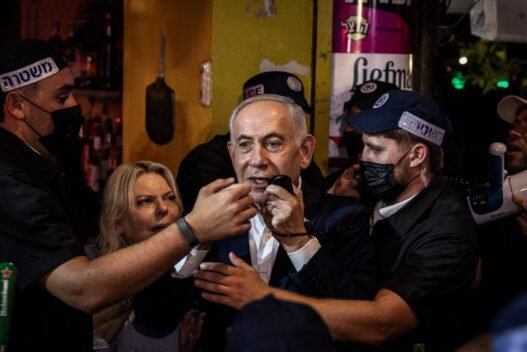
Historical support for Kurdish independence also fuels suspicions about the motives behind disarming the factions. Benjamin Netanyahu openly endorsed the establishment of a Kurdish state in September 2017, while Israel’s close ties with Iraqi Kurdistan, dating back to the 1960s and the era of Mustafa Barzani, father of Masoud Barzani, remain an important source of regional political mistrust.
The Limits of the Disarmament Roadmap
These unresolved questions help explain why Prime Minister al-Zaidi has been unable to fulfill his pledge to bring weapons under state control. After announcing a September deadline of September 30, 2026, he reaffirmed a roadmap on October 1 extending until June 30, 2027, insisting that decisions of war and peace must rest with the constitutional authorities.
The extended timetable underscores that the US withdrawal did not automatically settle the question of weapons. Nor does the roadmap amount to a comprehensive agreement with the factions.
On October 5, al-Zaidi said that five factions had agreed to surrender their weapons and that three had already done so, according to the government. Major factions, including Kata’ib Hezbollah, Harakat al-Nujaba, and Kata’ib Sayyid al-Shuhada, rejected disarmament or tied it to the completion of Iraqi sovereignty.
The distinction is crucial: agreement by some factions, actual weapons surrender, and a settlement encompassing the principal armed groups are three different things.
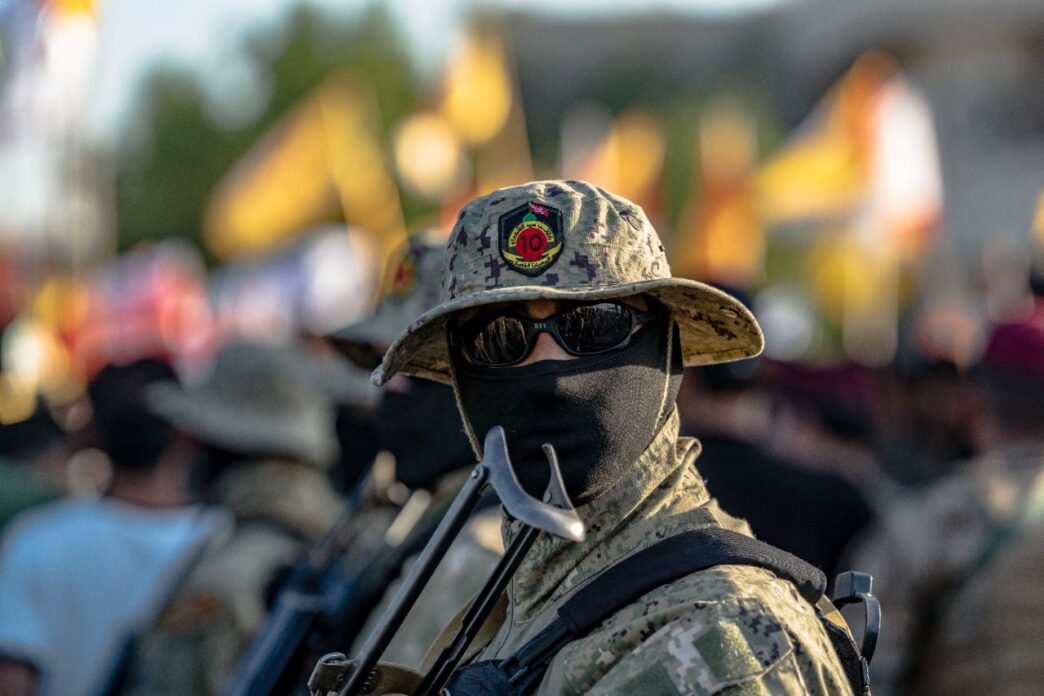
Nor do the factions constitute a homogeneous institutional bloc, or should they be treated as synonymous with the Popular Mobilization Forces (PMF). The PMF is a legally recognized security umbrella. The central dispute concerns the extent to which specific organizations retain autonomy over operational decisions, the management of their arsenals, and their external relations.
Disarmament, integration into state institutions, and compulsory subordination to state command are interconnected but distinct processes. Treating them as interchangeable risks complicating an already difficult negotiation.
One of the factions’ strongest arguments concerns the sequencing of these steps. They contend that surrendering weapons before Iraq can defend itself would strip them of leverage while leaving the country’s fundamental vulnerabilities intact. Any workable agreement, they argue, must pair tangible security improvements with clear changes to the autonomy of armed factions.
This would require four measures: (1) a verified withdrawal of foreign forces; (2) stronger border protection and credible air-defense capabilities; (3) a security understanding between Baghdad and Erbil; and (4) financial independence from Washington.
The US withdrawal is therefore viewed by some in Iraq as an important milestone toward restoring sovereignty, not its completion.
The completion of government formation on October 15 adds another dimension to this test. Parliament approved the filling of vacant ministerial portfolios and the appointment of deputy prime ministers, including Laith al-Khazali, brother of the leader of Asa’ib Ahl al-Haq and subject to US sanctions.
This underscores the parallel between the disarmament process and the continued participation of figures associated with armed factions in government. The question is whether such participation will entail the actual subordination of military decision-making to the state, or whether political partnership will remain separate from the autonomy of arsenals and operational decisions.
Al-Zaidi cannot resolve the question of weapons simply by setting deadlines, just as the factions cannot justify retaining exceptional status indefinitely. Unless the state demonstrates its ability to protect Iraq against external pressure and coercion, disarmament will continue to face objections grounded in sovereignty.
Whether these objections become a pathway to a stronger state or a justification for the indefinite fragmentation of power will help determine the trajectory of Iraq’s next political struggle.