



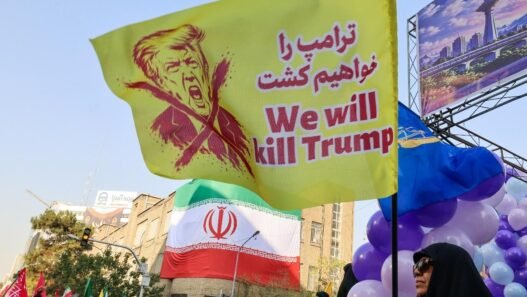

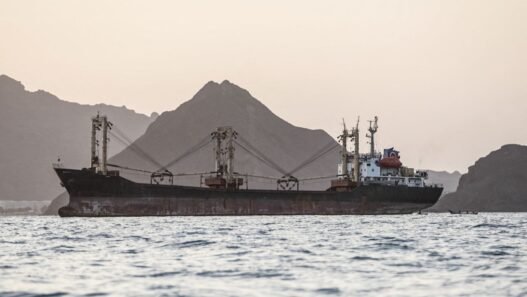

As it steps into the light, Al-Khat finds itself facing a region ablaze, where the structures of the existing order, along with their security and economic ties, are drawing their final breaths. From Palestine, where genocide, occupation, apartheid, and annexation are unfolding, to the expansionist reach of “Greater Israel,” pushing ever deeper into neighbouring territories, particularly in Lebanon and Syria; from Iran and the Gulf to the Strait of Hormuz, Yemen, and Saudi Arabia. What our region is witnessing today is not simply another attempt to liquidate the Palestinian cause. Israel has reached a stage at which achieving its objectives requires the redrawing of the geopolitical map itself, evoking the colonial era that gave rise to the Sykes-Picot and Balfour projects. Meanwhile, we are witnessing the slaughter unleashed across Ukraine and Russia, under the shadow of NATO, Europe, and the United States, where the spectre of nuclear terror and its inferno no longer seem to inspire restraint.
These conflicts are multiplying at an almost irreparable pace, unfolding alongside rapid structural shifts in the global balance of political, military, and economic power.
This violence is erupting as many current and former officials in Western capitals, along with prominent experts and analysts, increasingly speak of the decline of American hegemony and the disintegration of the international order that prevailed under it. From their vantage point, they struggle to define this trajectory. Some see the emergence of a “post-American” or “post-Western” world; others speak of an all-encompassing international disorder whose outcomes are impossible to predict. Still others regard the very impossibility of understanding current events and developments across the globe as a defining feature of the present moment. This has led them to devise the concept of BANI, an acronym capturing a world marked by brittleness, anxiety, nonlinearity, and incomprehensibility.
To take stock of this moment, here and now, from within the eye of the storm as the fires of confrontation rage around us, is fraught with risks. It demands a sustained effort to understand where the successive fractures in the towers of American hegemony are leading; how long the unravelling of the world the United States has held in its grip for decades, including our own countries, will continue; whether the demise of hegemony will usher in the free emergence of our peoples and countries, or something else entirely; and how we might navigate what lies ahead.
Anyone who dares to think about the future of their country should expect no easy path. We believe it is all the more necessary to redouble our efforts to understand, and to help others understand, what is unfolding along our borders and across our region.
Launching a platform to take on this task is an intellectual gamble. A world racing through transformations of ever greater complexity demands continuous effort, close observation, and openness to everyone willing to share the burden of this undertaking.
Above all, we believe that this moment calls for a return to the foundations and basic principles of journalistic and analytical work, free from the grip of declining funding centres over its methods and content. A new edifice cannot be built from nothing. It requires restoring the vitality of journalism as one of the foundations of free and independent societies: a space for producing knowledge, interrogating reality, and opening up horizons for thinking about alternatives.
(Al-Khat Editorial Team)